About
Foolish Neil: the evidence.
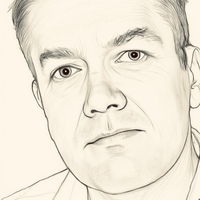
People call me Foolish Neil. Read on and you’ll see why. You’ll also see what it gave me: a boat I built, books I wrote and a life I chose.
I’m an independent writer based in Cornwall, where I belong. I was born in 1957, and now I’m approaching seventy. I think of myself as a generalist.
Here’s why:
I’ve been a Panel beater. Survival equipment specialist. Parachute technician. Motor mechanic. Rally driver. Yacht delivery mate. Single-handed sailor. Technical manager. Project manager. Show-jump builder. I’ve rebuilt cars, restored boats and refurbished houses. Now I’m an independent writer and author.
I was born in Birmingham, and I lived, was educated and worked in the Midlands for decades. It never felt like home, and it feels like a foreign country to me now. My real home was always Cornwall, where we holidayed regularly when I was a child. According to my father I was conceived in Falmouth, which may explain it.
I passed the 11-plus in 1968 and went to King Edward VI Grammar School in Lichfield, which I now regard as a wrong turn. It was a system little changed since Victorian times, and physical violence was accepted as a teaching method. I was caned twice and slippered regularly, and lesser punishments, many of them inventive, were a daily event. I had no close friends there, and I didn’t rebel so much as switch off. The exception was my English teacher, Craig Thomas, who later wrote the novel Firefox and fired my enthusiasm for reading and writing, though too late to change my results. I left in 1973 with a handful of low-grade CSEs.
After tech college and a vehicle-bodybuilding apprenticeship, a year on a unionised bus-depot shop floor left me craving an escape. In January 1975, I joined the Royal Navy and trained at the notorious HMS Ganges. I then worked in the survival equipment branch, mostly at RNAS Culdrose, my first time living in Cornwall. Despite my dislike of rules at school and work, I found the Navy different. It was harsh but had a visible purpose, and it gave me my first real friendships. I left in 1978 because staying would have meant at least nine more years, probably ashore, with slow promotion.
I spent the next eighteen months in South Africa as a parachute technician, drawn by the chance to rally on dirt roads. Living there taught me how the world works: how British firms got round sanctions. How media shape the opinions of whole populations. How there are always two sides to every story.
Back in the UK, I worked as a mechanic to fund my rallying until cost, a written-off car and a dismissal ended it in 1982. I won an industrial tribunal for unfair dismissal that November. Shane Acton’s book Shrimpy, about sailing round the world in an 18ft boat, gave me the idea of a boat as a home and a way to travel. In 1983, I bought a similar boat to ‘Shrimpy’ for £1,200. I taught myself to sail her and took her along the south coast to Falmouth, arriving there with little money, no idea where to keep the boat and no contacts. Within days, I had a berth and friends. Within weeks, I had work as yacht-delivery crew.
In May 1984, I set out single-handed towards Spain. Four days out weather, seasickness and fatigue left me incapacitated. A French fishing boat pulled me to safety. I sold Mor Gwas that summer. The boat passed the test and I didn’t. I lost my home and way of life, and I nearly died.
I then spent nearly two decades conforming: doing what everyone else was doing, on the promise of reward for doing it. I worked in my father’s flooring distribution business, then for Gerflor, a French flooring manufacturer, where I became technical manager. I sat on trade and British Standards committees and project-managed sports floor installations for the 2002 Commonwealth Games and the 2003 Special Olympics.
I married in 1986, and we had a daughter a couple of years later. Nineteen ninety-one brought that relationship to an end and became the start of a year from hell. The early 1990s were the lowest point of my life, and I came perilously close to not surviving them.
Once the dust settled I began to rebuild. Another girl, another house, another job. That relationship lasted ten years, ending in 2006 when she pulled the plug.
I complied, I trusted, and I lost, twice.
In 2006, I decided to build a Wharram catamaran, an idea that dated back to seeing one in Penryn in 1983. It was my escape. I had little money, no building space and no building experience. I committed to it anyway and worked on her for seven and a half years, from December 2006 to May 2014. I left my last salaried job in 2010 to concentrate on it, and did part-time work building show jumps, including a Cutty Sark-themed one for the London 2012 Olympics.
This time I picked the right girl and got together with Gail in December 2006. We began living together in 2011 and entered a civil partnership in 2022.
Gleda was launched in 2014. In 2015, we sailed her out of Falmouth Bay, across Biscay to Spain and Portugal, then on to Cartagena in SE Spain, and we had wonderful years aboard her. I wrote three books along the way: A Foolish Voyage (2015), A Foolish Odyssey (2018) and A Foolish Escape (2020).
Our cruising ended in 2018. My mother had died the previous December and my father was struggling alone, so we returned to Cornwall. I sold Gleda to a German friend, who took her across the Atlantic and through Panama to Tahiti, and she is now in Indonesia. I feel both pride and pain about that.
Back in Cornwall, we lived in a fifth-wheel caravan at first, then bought a small park home in 2021, after Brexit and COVID-19 ended our hopes of travel. I reached state pension age in 2023. Since selling Gleda I’ve tried several projects: Betfair trading, which failed, a novel set in ancient Cornwall, since set aside, writing on Medium for money, and the restoration of a second boat, Sólmara, bought in 2024. An AI-themed Substack project felt forced and I abandoned it.
I’ve sailed out of Falmouth Bay twice with no plans to return, a fool searching for freedom. Both times Cornwall called me back. It’s been fifty years of leaving and returning, and finally, I’m home.
And now I know what I want to write about.
There are three topics, and they share one thread: independence and freedom of choice.
- Owning your own ground. Most of us build online on land we rent. I now write on my own domain, keep my own list, and choose my tools deliberately. I’ll write about how to do that in plain language, and why it matters.
- Doing it anyway. We often assume someone else has to allow us to do what we want: a qualification, an employer, funding, the right moment. Sometimes we can’t even give ourselves permission. I built an ocean-going boat with no building experience. I didn’t have a plan, just a commitment, and I kept committing, and things turned up to help me. I’ll write about starting, and about what happens next.
- Paying attention. At sea, you can’t afford to drift. Fall asleep on watch and you hit the rocks or get knocked down by a squall. Ashore, I see many people sleepwalking: scrolling, distracted, with less bread and more circus each year. At my age I’ve watched the same cycles come round, economic crises, energy shocks and wars. I’ve also watched platforms get worse, personal freedoms narrow, and the influence we think we have over the people who run things grow thinner. Paying attention is how you keep hold of the helm. You see what’s coming, you choose your own course, and you get your life back. I’ll write about how to do that, and what it gives you in return.
I write from experience rather than theory, and I include what went wrong. I won’t tell you what to do. I’ll tell you what I did and what it cost, and you can make up your own mind.
What I value most:
- Independence. I’d rather own a small patch than rent a big one: my own domain, my own work, my own decisions. Having conformed and paid for it twice, I won’t fully conform again.
- Honesty. I’m bullshit-intolerant, and I try to be straight with others and with myself. I’m too old to be anything but true to who I am.
- Experience over security. I’ve valued life, experience and happiness over money and sensible investment, and I accept the cost.
If you want to support what I do, I have a shop where you can buy my books (cheaper than Amazon), pick up shorter guides and things I publish from time to time, or simply buy me a pint if you’re feeling generous.
It’s HERE
Direct eMail - neil@neilhawkesford.co.uk
Thanks for reading.
Neil
