I read old, obscure books from Project Gutenberg to follow my curiosity beyond the familiar. If we only read what everyone else is reading, we risk arriving at the same views. Older books can offer a fresh angle—or wisdom we’ve overlooked.
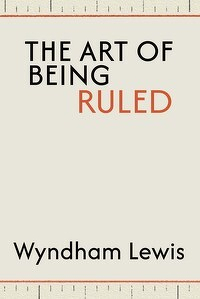
I’ve picked The Art of Being Ruled by Wyndham Lewis from Project Gutenberg. Published in 1926, it’s a provocative look at how society shapes people’s beliefs and behaviour—questions that still feel relevant today.
Dreams of the Sea - William Henry Davies
Poetry isn’t really my thing, but this one speaks to me.
I know not why I yearn for thee again, To sail once more upon thy fickle flood; I’ll hear thy waves wash under my death-bed, Thy salt is lodged forever in my blood.
Yet I have seen thee lash the vessel’s sides In fury, with thy many tailed whip; And I have seen thee, too, like Galilee, When Jesus walked in peace to Simon’s ship.
And I have seen thy gentle breeze as soft As summer’s when it makes the cornfields run; And I have seen thy rude and lusty gale Make ships show half their bellies to the sun.
Thou knowest the way to tame the wildest life. Thou knowest the way to bend the great and proud: I think of that Armada whose puffed sails, Greedy and large, came swallowing every cloud.
But I have seen the sea-boy, young and drowned, Lying on shore and by thy cruel hand, A seaweed beard was on his tender chin, His heaven-blue eyes were filled with common sand.
And yet, for all, I yearn for thee again, To sail once more upon thy fickle flood: I’ll hear thy waves wash under my death-bed, Thy salt is lodged forever in my blood.
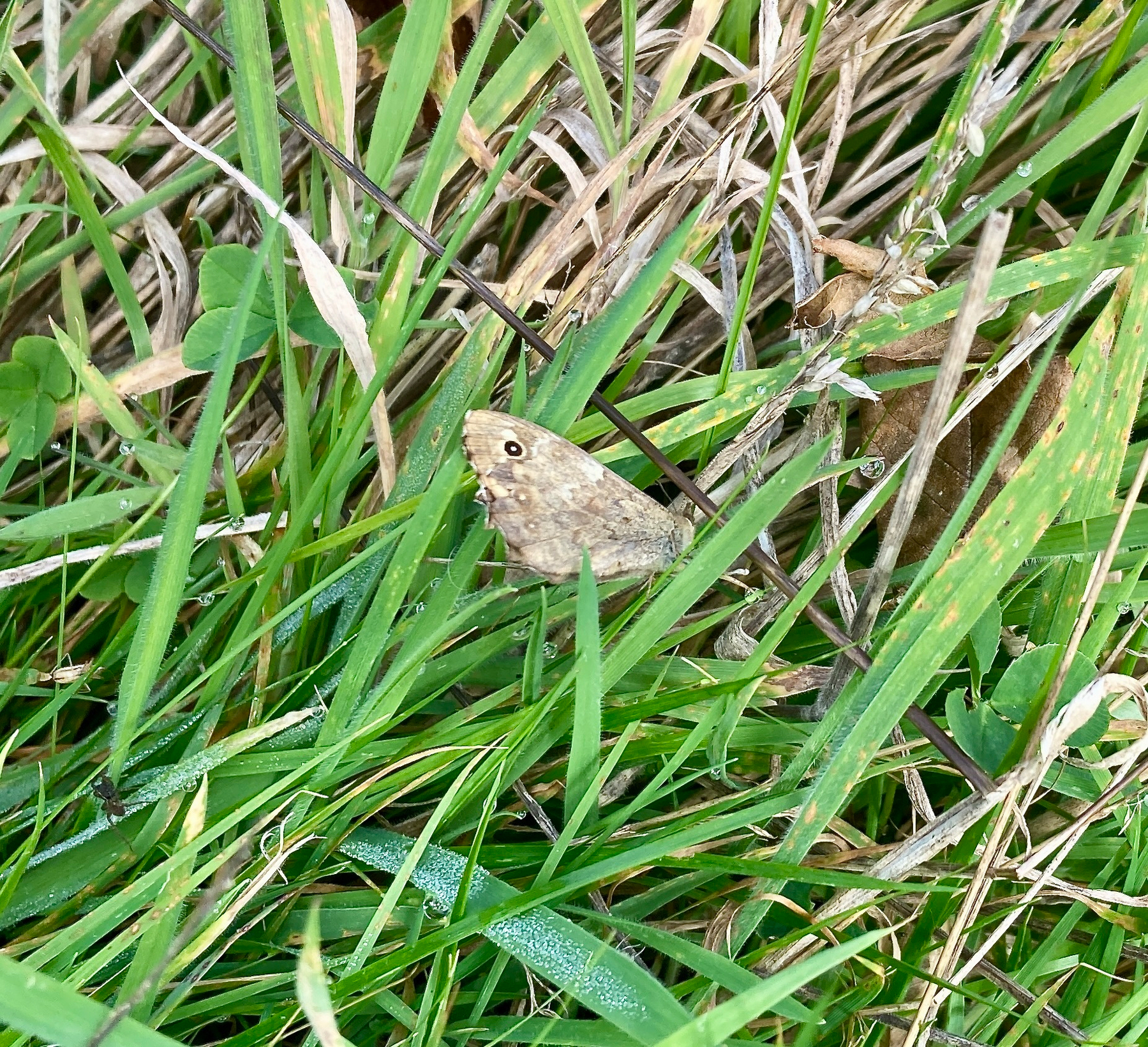
Quite a few little Speckled Wood butterflys flitting about on my 🧠Thinking Walk🚶🏻♂️today. Hard to catch one sitting still.
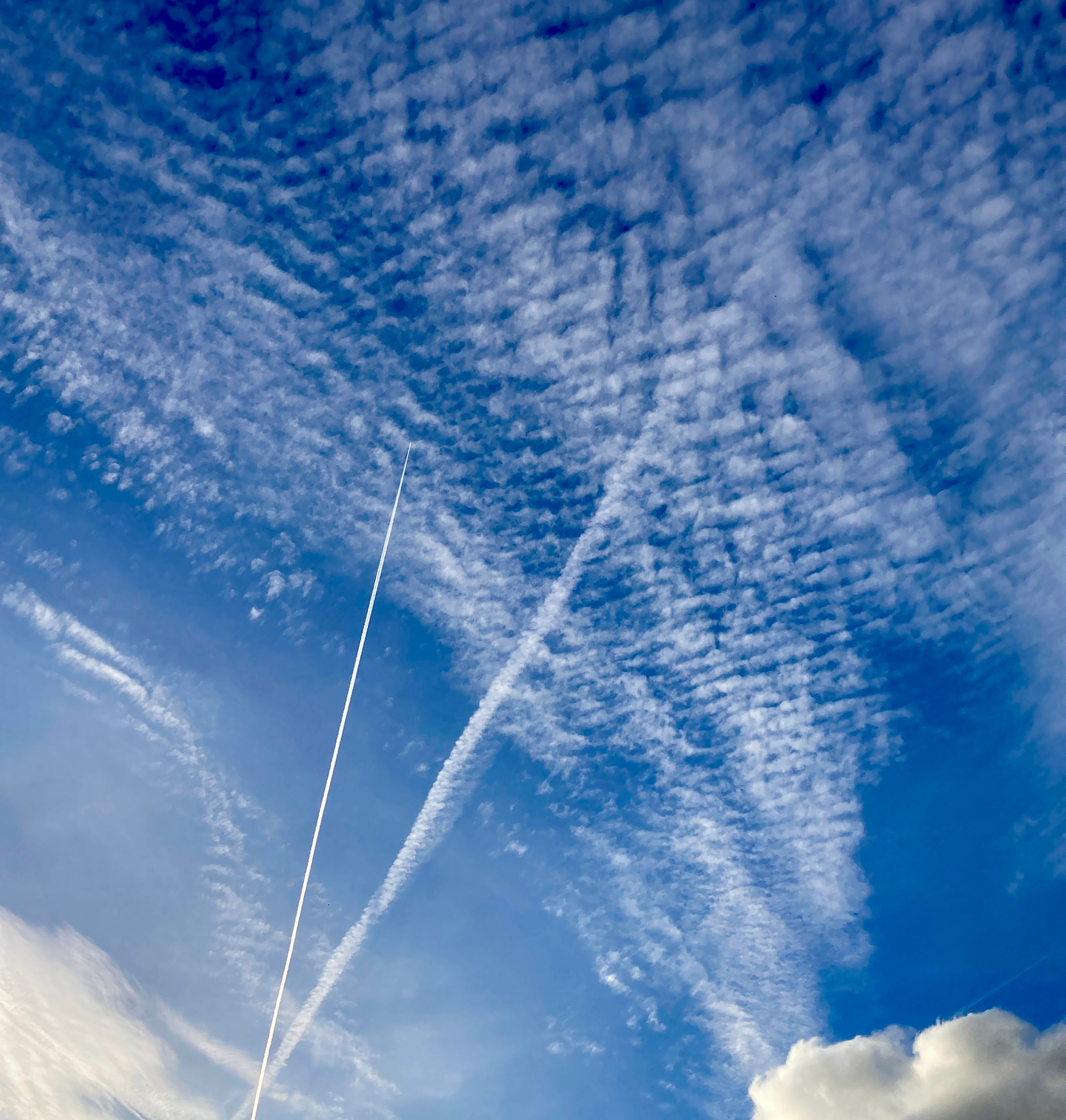
Attention Is a Choice
In the Navy part of my job was to pack parachutes, and one of them was used for real.
It was fitted to the pilot ejector seat of an 892 Naval Air Squadron Phantom. The aircraft suffered a catastrophic birdstrike just after take off, and both crew had to ‘bang out’.
Afterwards, the chutes were returned to our section.
Every chute had a servicing record card, and the last name on one of the cards was mine.
I think about that card now and again. Nobody stood over me while I packed that parachute. Nothing told me, at the time, that this one would matter more than the others on the bench. There was just the job, done properly or not, and a signature at the end of it.
The easy kind of attention
When people talk about attention they usually mean concentration, and focus comes easy when the stakes are high. I never had to talk myself into paying attention to a parachute. The whole job was built so that you couldn’t do otherwise. There was a procedure to follow, a card to fill in, a name to put on it, and somebody who would one day ask what you had done. Somewhere out there was a person who would trust that canopy with their life, whether or not they ever knew my name.
That’s attention with the choice taken out of your hands. It was still a choice, of course, but the circumstances made it for me, so it felt like part of the work and not a decision.
The hard kind
The harder kind is the everyday sort, where nothing is at stake, nobody is checking and there is no card to sign.
William James, the father of modern psychology, put it plainly in 1890: “My experience is what I agree to attend to.” Think about how much that says. Whatever you notice becomes your life. Whatever you don’t notice, in effect, never happened. And because attention is limited, every time you agree to look at one thing you agree not to look at something else.
Anyone who has stood a watch knows how this works in practice. The rules of the sea require a proper lookout at all times, and the lookout rarely slips in a gale. It slips on a fine, quiet afternoon when nothing’s happening and the mind wanders off. The dangerous moments are often the dull ones.
The agreement isn’t free, either. Herbert Simon, who won a Nobel Prize in economics, saw this coming in 1971, long before the internet or the smartphone. Information, he pointed out, consumes the attention of whoever receives it, so “a wealth of information creates a poverty of attention.” Gloria Mark, a researcher at the University of California, has spent twenty years measuring what that looks like. In 2004 people stayed on one screen for about two and a half minutes before switching to something else. The most recent figure she reports is around 47 seconds.
I don’t think that’s simply weak will. There are very clever people paid to make looking away from a screen difficult. My generation met technology gently, with an electronic calculator at school, dial-up internet later, and a clumsy home-made blog in 2006, and has watched it become relentless. So if attention is a choice, it’s a choice made against a headwind. I’ve dealt with that partly by taking myself out of some of the places that ask for it. I don’t use social media (except for Bluesky), and my writing lives on my own domain. But a headwind doesn’t abolish the choice. Any sailor will tell you it simply means you have to keep making it, and make it deliberately.
Looking without a reason
So why bother, when there is no card and no stranger in a cockpit?
My answer is a plain one. I try to pay attention, not because I’m looking for anything in particular, but because you never know what you may see.
That’s an odd sort of reasoning, and it doesn’t sit well with most advice on focus, which wants attention aimed at a goal. The French philosopher Simone Weil, writing in 1942, called attention “the rarest and purest form of generosity.” She also thought it was less a matter of straining than of waiting: staying open enough to take in what is actually in front of you, not what you expected to find. That matches my experience far better than the word “focus” does.
Last week, as I stomped round the field on my 🧠Thinking Walk🚶🏻♂️, I spotted a funky lime green caterpillar See it here
If I’d not had my eyes open, if I hadn’t been paying attention, I could easily have trodden on it. I wouldn’t even have known it was there. A caterpillar was the last thing I’d have been looking for.
The same card, a different job
Looking back, I don’t think packing parachutes and noticing the ordinary are two different things. A packer’s attention is care for someone you can’t see. The everyday kind is care for a world that can’t thank you or check your work. In both cases, the attention is a gift because it asks nothing back, and in both cases whoever benefits may never know where it came from.
The difference is that the Navy made the choice for me and wrote it down. Everyday life doesn’t. Nobody will check whether I noticed the weather turning, or the person who needed someone to listen properly, or the thing that was right in front of me. There’s no servicing record for any of it.
I’ve come to think that is exactly why it matters. When there is no card, the only signature is your own.
What If It’s Not Impossible?
Commitment, coincidence and the unexpected ways life opens up.
I’ve collected quotes for years. Most have disappeared into a digital archive, never to be seen again. But one has stayed with me, because I’ve come to recognise something in it that I’ve experienced in my own life.
It’s from The Scottish Himalayan Expedition, written by W. H. Murray, a Scottish mountaineer who understood something about venturing into the unknown.
Here’s the passage that matters to me:
Until one is committed, there is hesitancy, the chance to draw back. Concerning all acts of initiative (and creation), there is one elementary truth, the ignorance of which kills countless ideas and splendid plans: that the moment one definitely commits oneself, then Providence moves too.
Murray goes on to describe how commitment sets a stream of events in motion, bringing unforeseen encounters, opportunities and assistance that would never otherwise have come your way.
He concludes:
Whatever you can do, or dream you can do, begin it. Boldness has genius, power, and magic in it. Begin it now.
You may have come across these words before. They’re often attributed to Goethe, but they come from Murray’s account of an expedition to the Himalayas.
His team faced a catalogue of problems, including a shortage of funds, difficulties obtaining visas and permits, and a lack of equipment. Their plans seemed unlikely to succeed.
They bought their tickets to Bombay anyway.
I’ve returned to that passage many times over the years. Not because I believe in magic, or because I think the universe will deliver whatever I want simply because I ask for it.
It’s because I’ve seen something in Murray’s words play out in my own life.
Three occasions stand out.
In 1983, I arrived in Falmouth aboard Mor Gwas, an 18-foot sailing boat. I had little money, no plan and knew nobody.
I wasn’t following a carefully constructed strategy. I was there because I’d committed myself to a voyage and had set off.
I berthed alongside another boat. Its owner introduced me to Clive, a delivery skipper. That introduction led to paid sailing work, numerous trips and experience I could never have gained by staying where I was. Among other things, I eventually sailed from Falmouth to Tenerife.
Think about that for a moment.
I hadn’t arrived in Falmouth with a network of contacts, a job offer or a plan for building a sailing career. I couldn’t have put any of those things on a list of assets before setting off.
But I’d put myself in a position where the opportunity could arise.
Had I stayed at home, it couldn’t have happened.
Years later, I embarked on a much bigger project: building Gleda, a Wharram Tiki 38 catamaran.
It took eight years of work before she was launched in 2014. During the build, I struggled with hand tools and was often short of money. There were plenty of reasons to doubt whether I’d ever finish her.
Then something unexpected happened.
The owner of the barn where I was building Gleda took on a contract to manufacture horse jumps. He converted the adjoining barn into a fully equipped woodworking workshop.
He offered me free use of it, along with part-time work.
Suddenly, I had access to equipment I couldn’t afford and a way of earning money while continuing with my project.
I hadn’t planned for any of this. I couldn’t have foreseen it, let alone arranged it.
Yet there I was, building a boat that would eventually take Gail and me cruising around the Mediterranean for several years.
The opportunity appeared because I was already committed to doing something that, at times, seemed beyond my means.
More recently, Gail and I had plans to live and travel in a fifth-wheel caravan. COVID-19 and Brexit put an end to them.
We were left wondering where on earth we were going to live.
We had no solution waiting in the wings. No carefully prepared alternative. Just a problem we needed to solve.
Within days, an old park home came onto the market It was located just a few minutes from where we had our caravan. It needed considerable work, but the price was ridiculously low.
Within two weeks, it was ours. We moved in a few months later.
Again, something appeared that we hadn’t known existed when we needed it.
Looking back, I can see a pattern in these three experiences. On each occasion, I’d committed myself to a course of action without knowing how everything would work out. On each occasion, something happened that opened up possibilities I couldn’t have anticipated.
Could I have planned for any of those opportunities? No.
Could they have happened if I’d never put myself in those situations? Almost certainly not.
So, what is Providence?
Murray called it Providence. Others might call it God, fate, luck, coincidence or the Universe. I’m not particularly interested in arguing over the name.
What interests me is the possibility that there’s something important in the relationship between commitment and opportunity.
Before we commit ourselves to something, we tend to assess it using what we already know. We calculate the cost, identify the obstacles and consider the risks.
That’s sensible enough, up to a point.
But we can only make those calculations using the information available to us now. We can’t account for people we haven’t met, opportunities that haven’t appeared or solutions we haven’t yet discovered.
If we insist on knowing how everything will work out before we begin, we may never begin at all.
And that creates a curious problem. By refusing to act until success looks reasonably certain, we may prevent the very events that could make success possible.
Commitment changes our position. We start doing things, meet people, acquire skills and encounter situations that would otherwise remain outside our experience. Sometimes, those encounters lead somewhere unexpected.
Perhaps that’s all Providence is. Or perhaps there’s more to it. I don’t pretend to know.
But I do know that, looking back over my life, some of the most significant opportunities came about in ways I couldn’t have predicted. They weren’t the result of following a reliable plan. They emerged along the way.
That doesn’t mean we should abandon common sense, ignore risks or leap blindly into situations we can’t afford to survive. Nor does commitment guarantee a happy ending. Things can go wrong, and sometimes they do.
But there’s a difference between recognising genuine danger and assuming something is impossible simply because we can’t yet see how to make it happen.
I wonder how many of us confuse the two.
Perhaps there’s something you’ve wanted to do for years. A project you’ve dismissed because you lack the money, the experience, the contacts or the time. Something you’ve decided is beyond your reach because you can’t see a route from where you are to where you want to be.
I’m not suggesting you throw caution to the wind and trust to blind faith.
I’m suggesting you consider a different possibility.
What if you don’t need to see the whole route before taking the first step?
What if some of the things you need will only become available once you’ve started?
Murray believed that when we commit ourselves, Providence moves too. I can’t prove that he’s right. But I’ve experienced enough to take his words seriously.
And perhaps that’s the point.
You don’t have to believe me. You don’t even have to believe in Providence.
Just leave open the possibility that what looks impossible from where you’re standing today might not look quite so impossible once you’ve begun.
You might be surprised by what happens next.
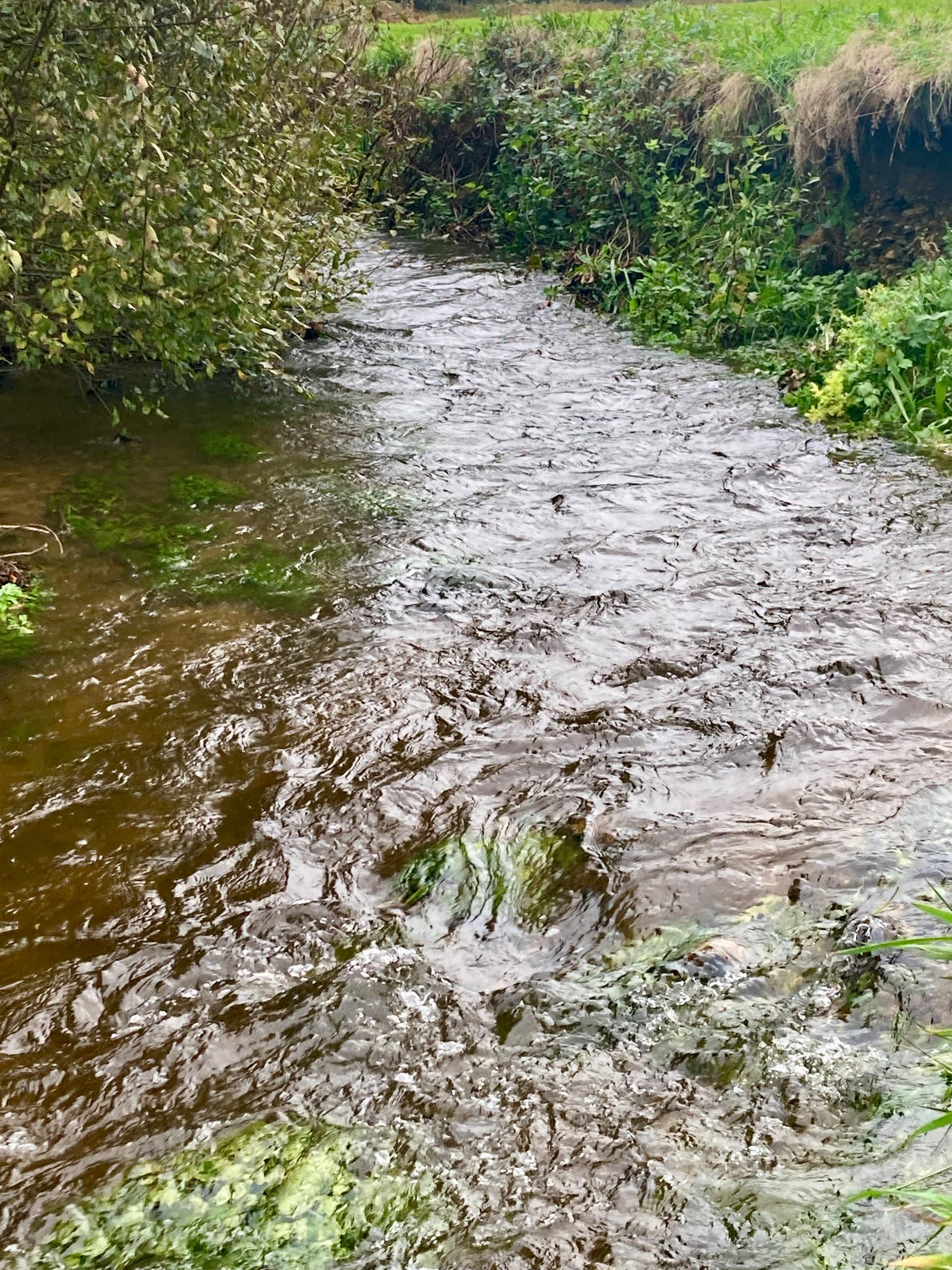
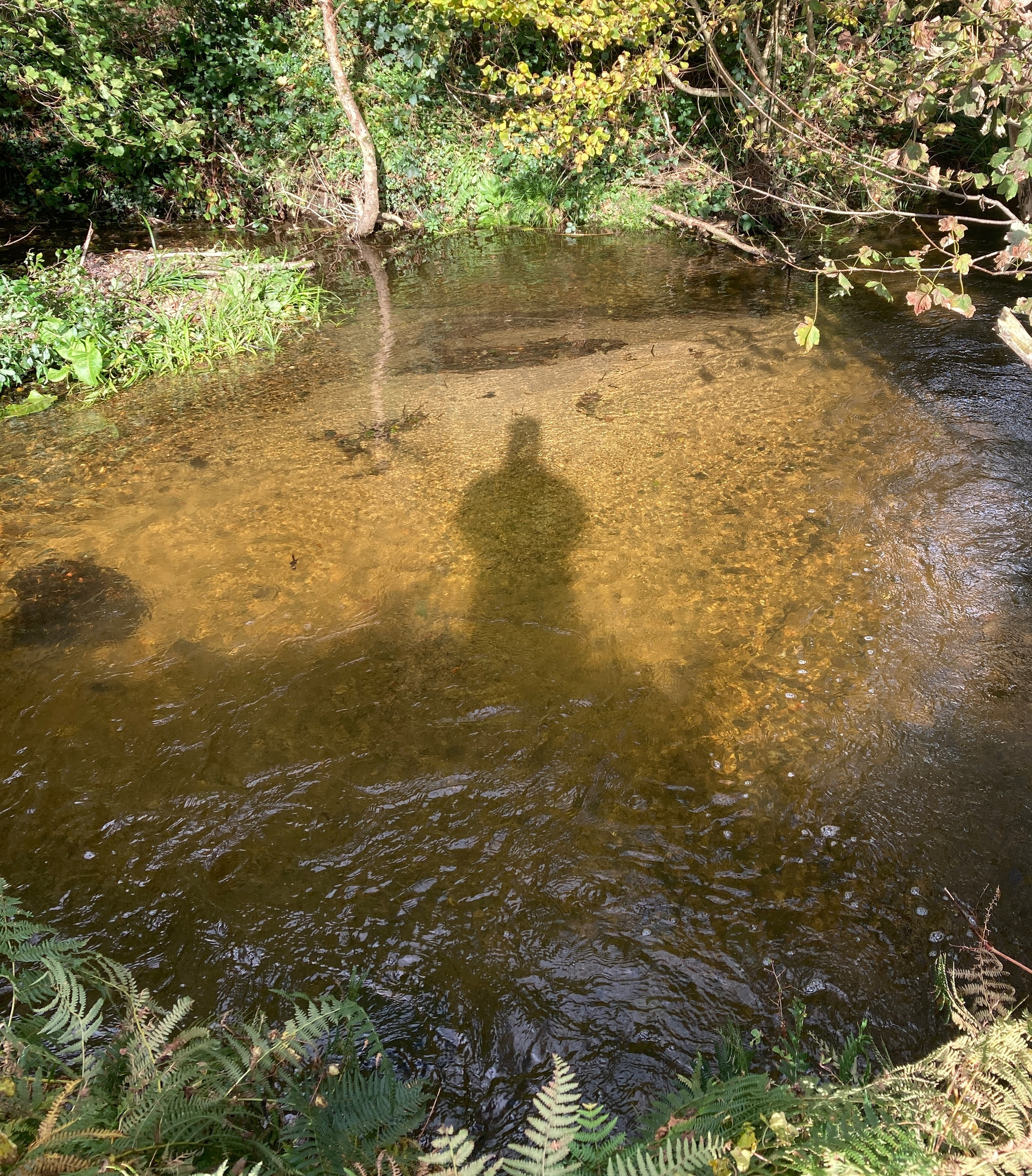
I’ve a busy week at my desk ahead of me, making my 🧠Thinking Walks🚶🏻♂️all the more important. A mild, mizzly and breezy one this afternoon. The recent rains are bringing the river Kennall back to life. I’ve not heard the water flowing for months. Now it’s beginning to babble and chuckle again.