
I Built an Ocean-going catamaran. I’m Still Not Sure How
A tale of productive insanity
It’s nearly twenty years since a rag-eared ring bound little book fell out of a box I was unpacking.
I’d been working in a kind of numbness, trying to stay busy, trying to ignore the shit my mind was attempting to feed me.
Then there it was, like a beam of sunlight piercing the darkness. I smiled for the first time in ages. I picked it up, sat in my chair and started flicking through the pages.
A spark flashed.
The fire caught.
It saved me.
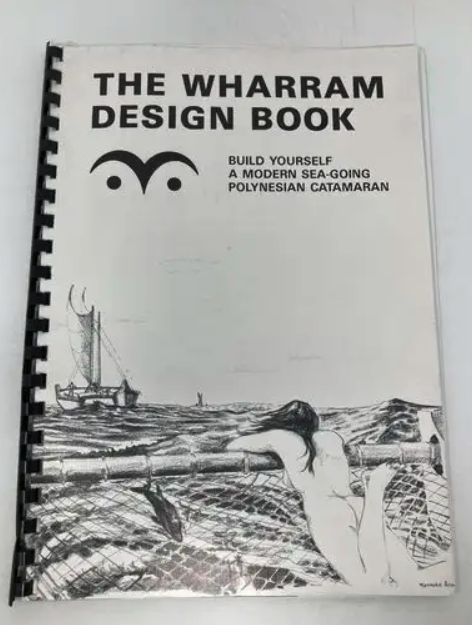
Within days, I’d chosen one of the designs; a Tiki 38 catamaran. 38ft (11.6m) length, 22ft (6.2m) wide, 3.5 tons (3000 kg) weight, capable of crossing oceans. Within a week, I had the study plans, the week after that I ordered the full build plans. Several hundred pounds I could ill afford. But I’d made a decision and I needed to commit.
I’d no money for materials.
I’d no place to build.
I’d no idea what I was doing.
I just knew I had to find a way.
There’s a well-known quote from W. H. Murray the Scottish mountaineer and author, it goes like this:
Concerning all acts of initiative (and creation) there is one elementary truth, the ignorance of which kills countless ideas and splendid plans: that the moment one definitely commits oneself, then providence moves too. All sorts of things occur to help one that would not otherwise have occurred. A whole stream of events issues from the decision, raising in one’s favour all manner of unforeseen incidents and meetings and material assistance which no man would have dreamed would come his way. I have learned a deep respect for one of Goethe’s couplets: “Whatever you can do, or dream you can, begin it. Boldness has genius, magic, and power in it. Begin it now.
Over the months and years that followed the truth in those words would be proved time and time again.
By the autumn of 2006 I’d found an old barn to rent close to where I worked and lived. I’d scraped together enough money to buy a pallet of plywood. I laid a chipboard floor, got my tools together and one cold, dark December night I cut the first two pieces of plywood (the skegs).
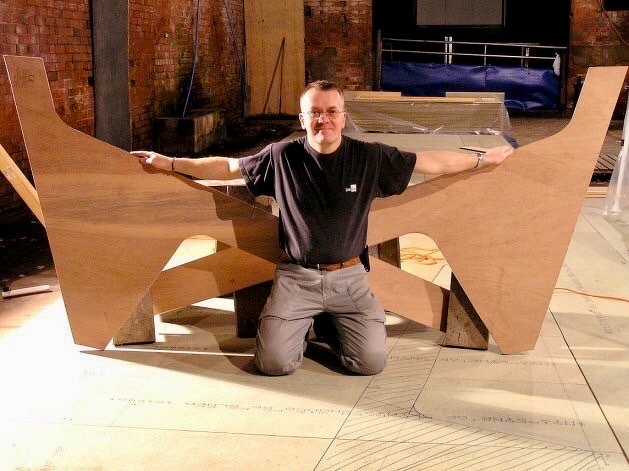 December 2006. The first pieces
Somehow, someway, I’d started building a boat. I started blogging. ‘The Gleda Project’ had begun.
Everyone thought I was crazy; They were right. A sane sensible person plans, budgets, makes pros and cons lists, thinks things through.
I didn’t do any of that, I just started.
That’s probably why it took me eight years and nearly 5,000 hours of work to get her on the water. It was a period of productive insanity.
Fatigue, illness, lack of money, work, family and more slowed me down or stopped me altogether. One year I only managed 46 hours of work on the boat.
Here’s another quote I learned the truth of. It’s from Arthur Ransome’s book Racundra’s Last Cruise written in 1928.
When it comes, the desire to build a boat is one of those that cannot be resisted. It begins as a little cloud on a serene horizon. It ends by covering the whole sky so that you think of nothing else.
If I’d thought about the project too much before I’d started, well, I’d never have started.
But here’s what’s interesting. Only a few months in and with not a lot to show, I’d already reached the point where abandoning the whole idea would have given me far more pain than continuing.
For years the goal stubbornly remained too far over the horizon to see. The work became the goal, step-by-step, doing what I could when I could. Each piece of wood cut, each pot of epoxy mixed, each inch of fibreglass sanded.
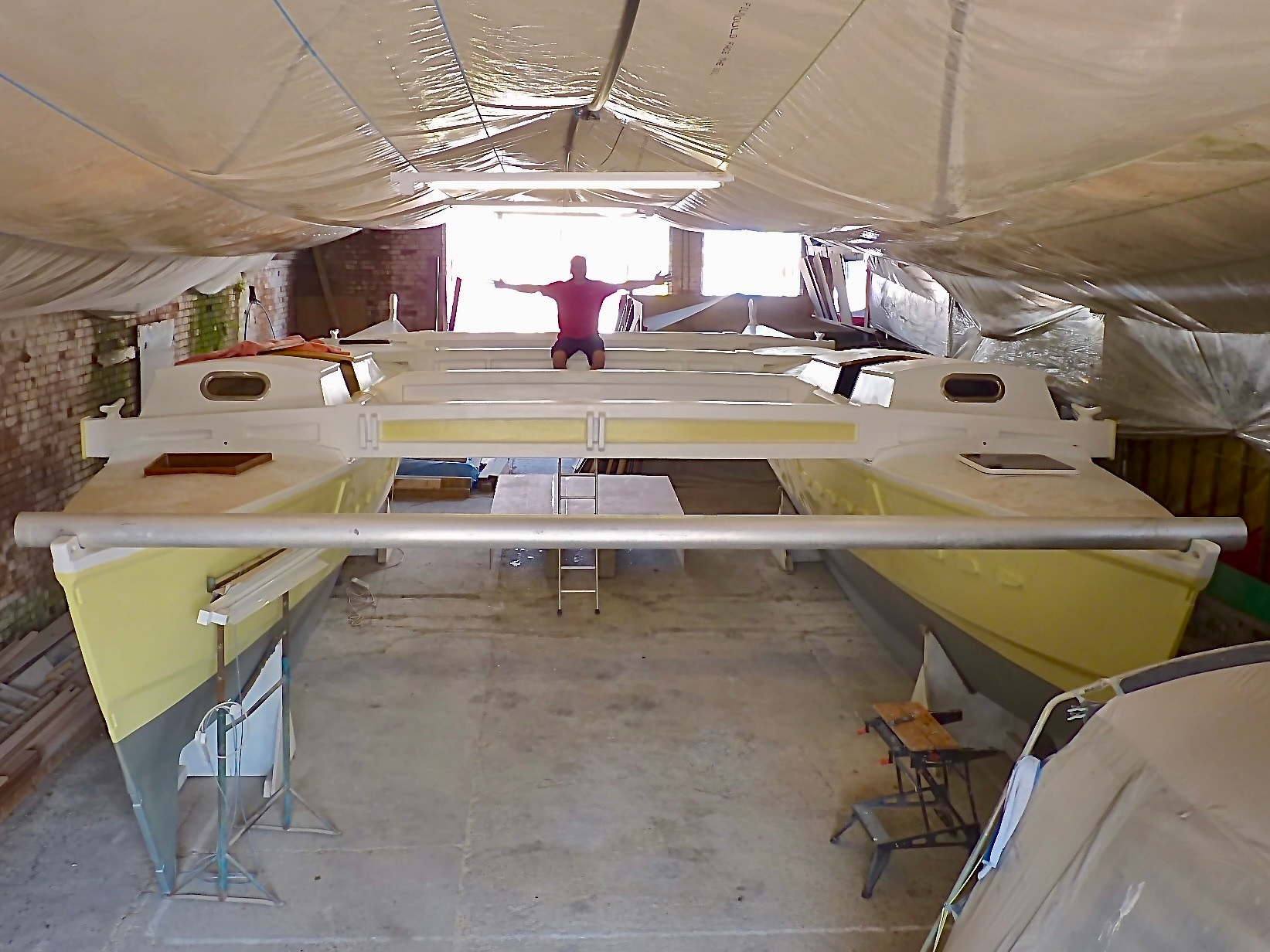 2013 - The hulls joined for the first time
But that said, on many dark wet, windy nights in the barn a vision came into my head. A vision of this thing I was creating floating on the open ocean, carrying me safely to new and exciting places, giving me adventures and experiences that would last a lifetime.
I’m proud to say dear reader that my dream became a reality.
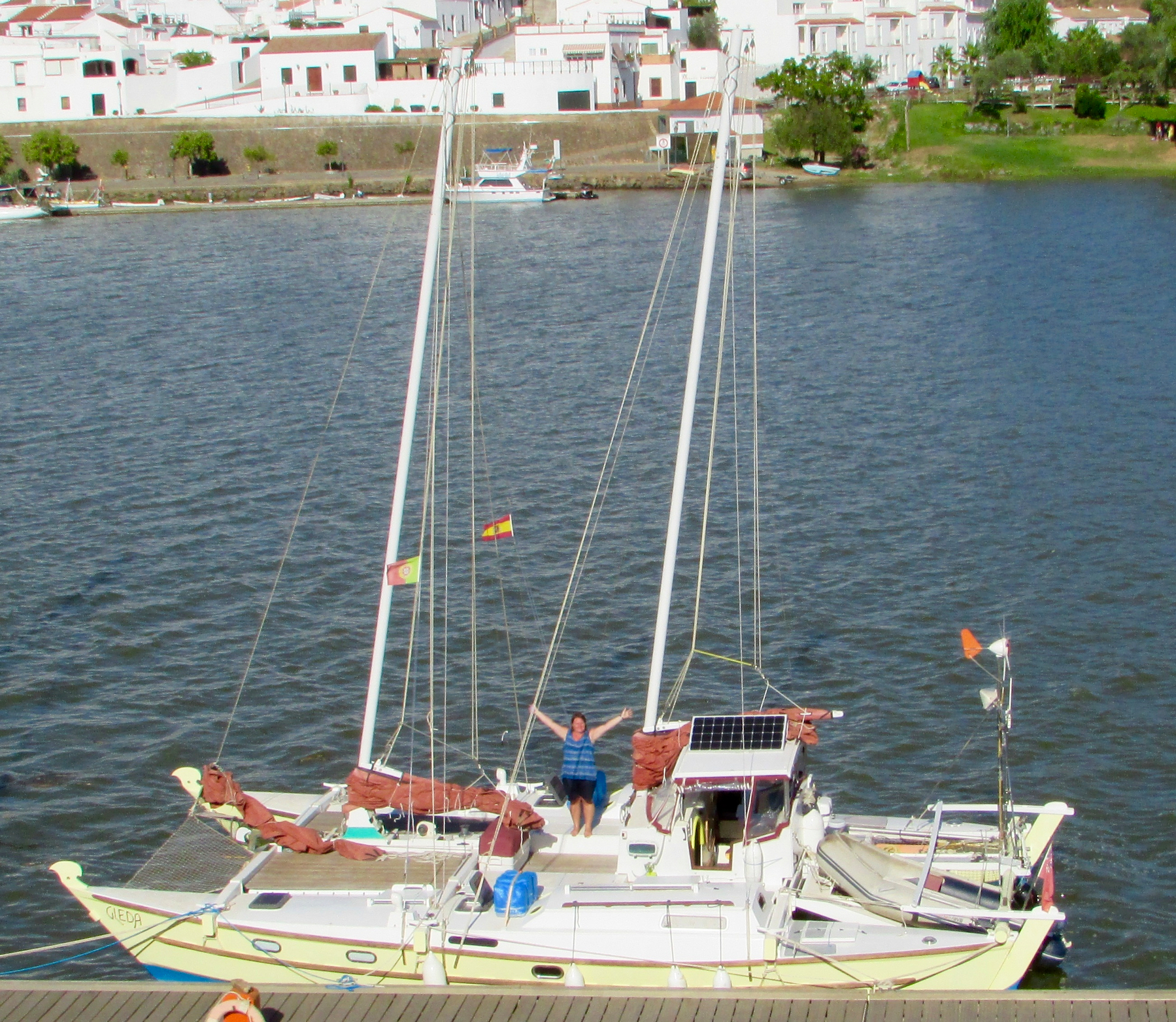
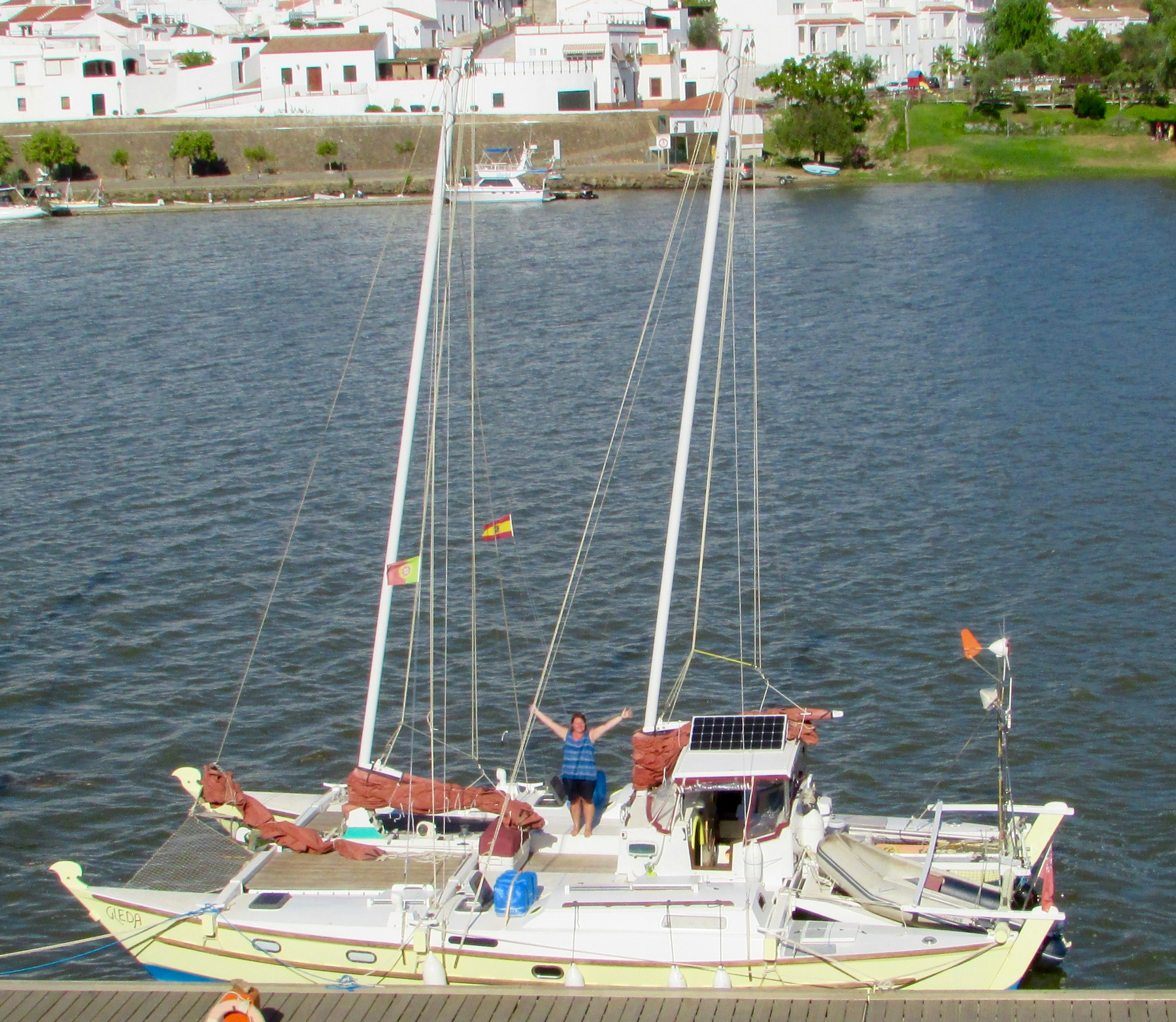 Gleda on the Portuguese side of the Rio Guadiana in 2016
Gleda is no longer mine. I sold her in 2018 to a German guy who’d followed the build since the start.
He and his wife are in Indonesia now. They’ve crossed the Atlantic and Pacific oceans on her.
I wish I could time-travel back twenty years. I wish I could find that crazy guy kneeling on the floor of a cold dark barn holding two pieces of plywood. I wish I could whisper in his ear, tell him his dream would come true, tell him he’d pass it on to others.
Building a boat taught me many things. One lesson in particular stays with me.
Whatever it is you want to do, start. Because you never know where it’ll finish.
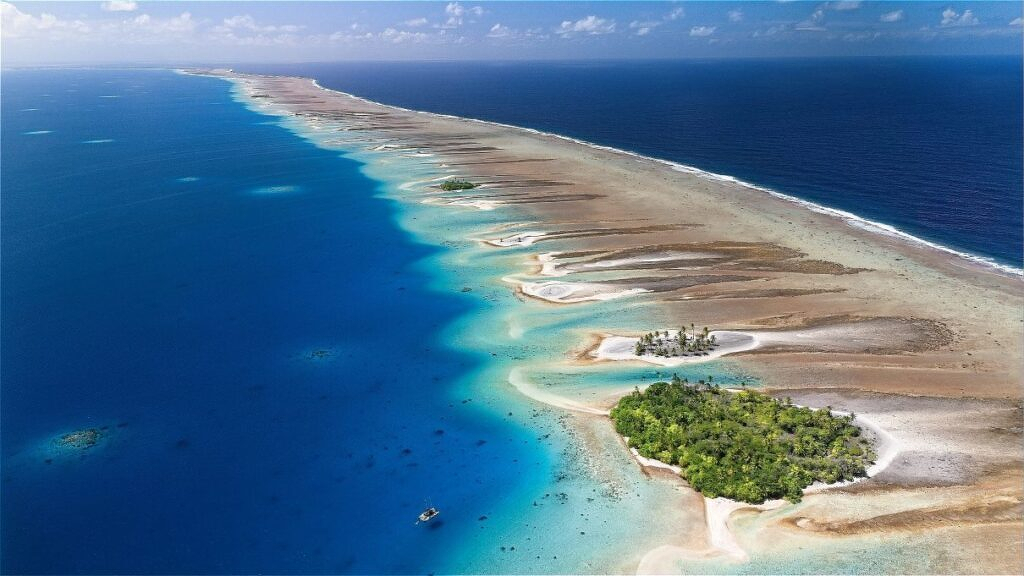 Gleda in the Pacific 2026 (bottom centre) - Photo courtesy of Michael Stephani
I use Bluesky because it feels like social media used to: you follow people, you see what they post. No Musk, no algorithm shoving sex, violence and racism in your face. I’m there to connect with readers and peers, not to chase reach, and for that it’s hard to beat. Maybe you’d like to join me there
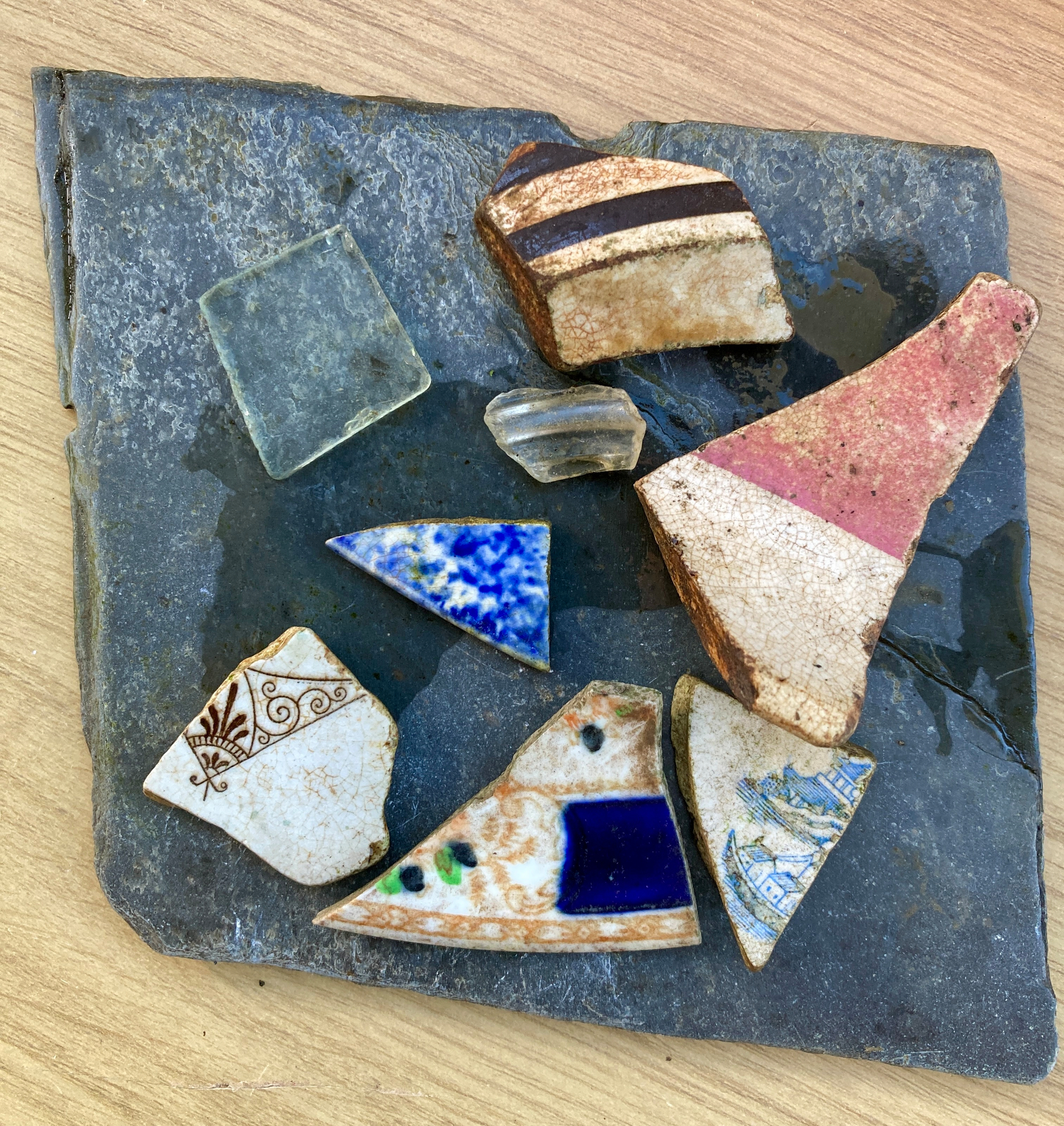
Today’s finds from the River Kennall: pottery, glass and worked slate, probably a century old. They’ve been washed downstream from the old mills and industries that once lined the river just upstream. Only little fragments, but each has a story. I rather like being their latest custodian.
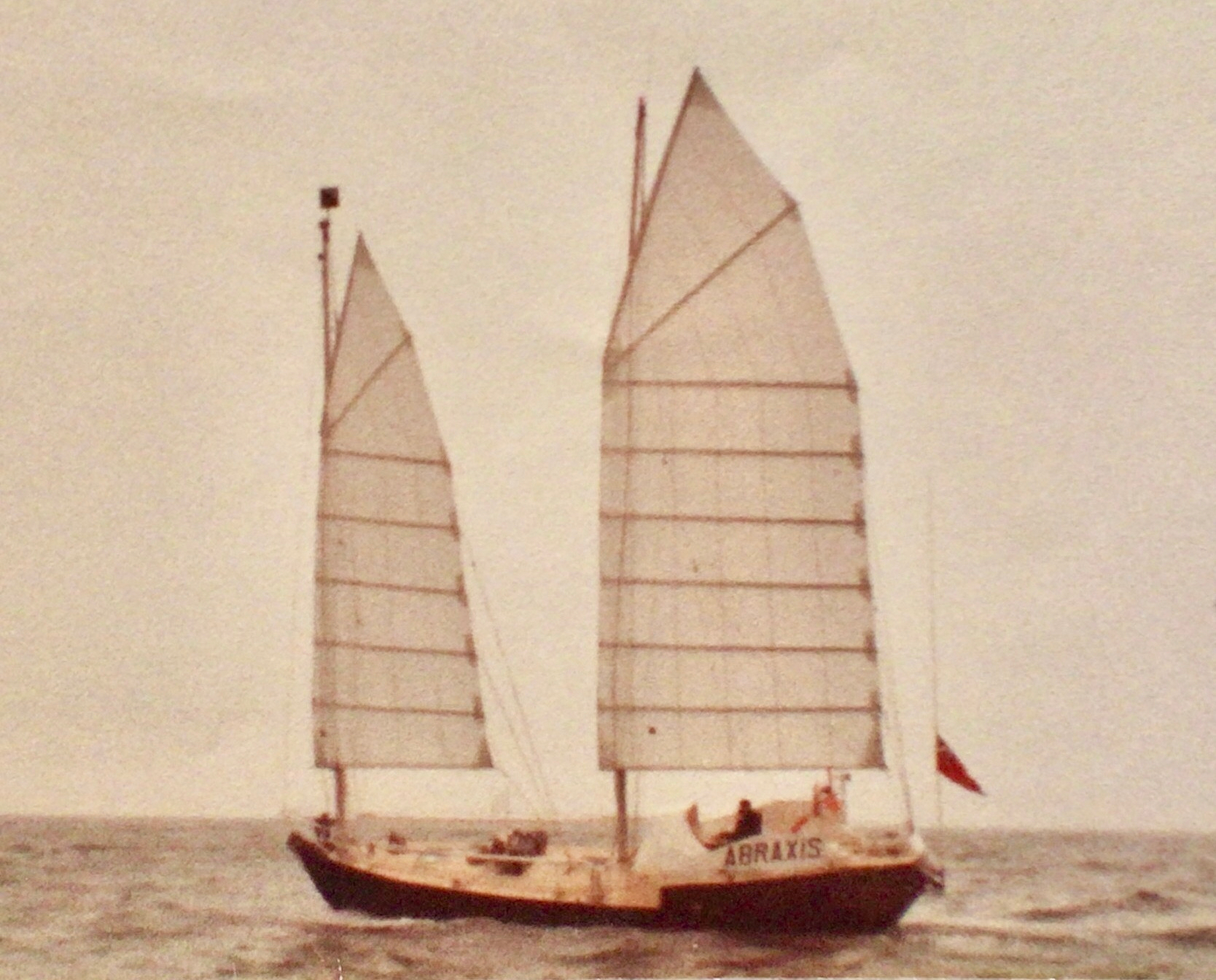
Just found this photo of ‘Abraxis’ taken in 1984. I was mate on a two-handed delivery from Falmouth to Tenerife. The first time I sailed a junk rig. The first time I crossed the Bay of Biscay. Apart from nearly hitting rocks in thick fog, and having an engine fire, the trip went well!
Phew! Road legal and hopefully set up for another year on the road. Piggy bank just paid the bill. Mind you, if diesel gets much pricier we’ll be on shank’s pony soon.
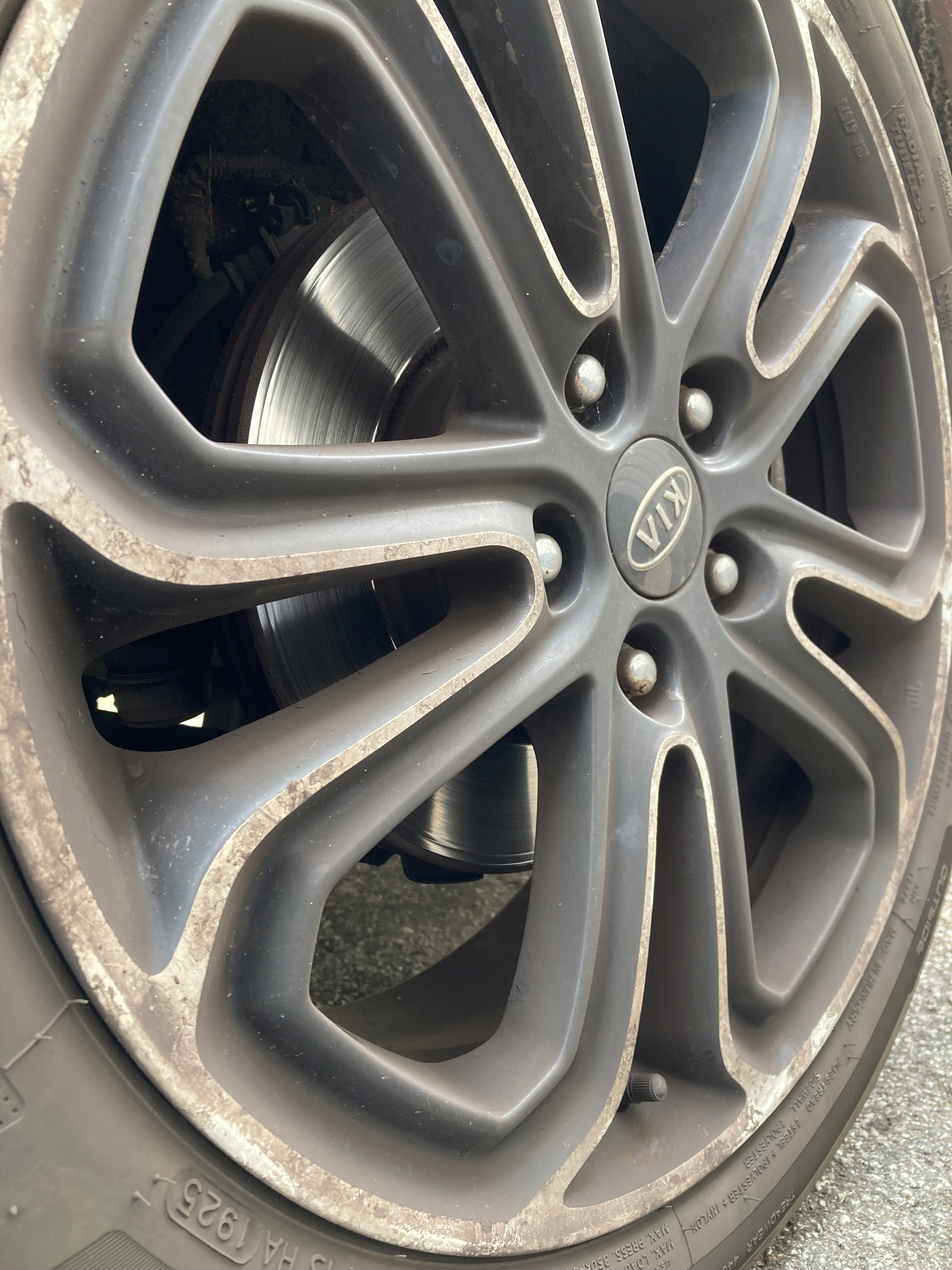
It’s that time of year again. Our car is in the workshop, over 100,000 miles on the clock. Govt roadworthiness test, annual service, mend what’s broken. Will it survive? Can we pay the bill? The sword dangles…………..
I’ve been invited to give an online talk to the Cruising Association of Ireland on the 28th of this month. My life as a sailor and author, sailing and living on a self built catamaran, Biscay crossings, cruising junk rig, cruising the waters of Cornwall, and more. Best get to work!

I'm 70 next February, and I'm starting over (again)
I’m 70 in February. I live in Cornwall on a state pension, and I’m starting over (again).
The pension pays the bills. Just. There’s no safety net, and one letter from a government I didn’t vote for could take it away. I’ll come back to why that matters because it’s the whole reason I’m writing this in public.
First, how I got here. I’ve restarted my life more than a few times, and not always by choice. The first time was the easiest.
I was 26. I rolled my rally car three or four times into a ditch and wrote it off, and rallying, the one thing I loved, was over. Weeks later the new manager at work screamed at me in a glass office, in front of a customer, and sacked me on the spot. I took the company to an industrial tribunal. Two barristers, and me, defending myself because nobody knew what had happened in that office better than I did. I won. They gave me a payout, not huge, but more money than I’d ever had in my hands.
I spent it on a 18ft sailboat called Mor Gwas instead of another car.
I’d read a book about a man who crossed oceans in a similar boat, and I decided I could do the same. After many adventures, I set off from Falmouth. Three days out I was a wreck: seasick, exhausted, unable to eat, and with worse weather coming and no way of calling anyone. Then a French fishing boat appeared. I fired a flare. They came alongside and pulled me off.
Mor Gwas was up to the trip. I wasn’t. She stayed afloat, and the French Navy salvaged her days later. She went to a Frenchman in Brest, and I went back to my parents’ house with nothing. For weeks afterward strangers would say “oh, you’re the one that got shipwrecked,” and I’d let them say it because I was too ashamed to correct them.
That’s what it feels like when something you’ve gone all in on doesn’t work.
Then came another fresh start. I did what people do. I got a job. I got married. We bought houses. First a little semi, then a tiny 220-year-old cottage. A baby came along. We bought a new-build, with three bedrooms and an ensuite. I worked in a warehouse. Left home at 5:30 in the morning, got home 7 at night. In 1991, the company I worked for went bust because an accounting firm couldn’t add up. Liquidators, chains on the gates, everyone laid off. Interest rates hit 15%. I paid the mortgage with a credit card. House prices were falling, My wife left me taking our daughter with her. The house sold for £30,000 less than we’d paid two years earlier.
I clawed my way back. Another relationship, another house. This time I thought it’d be OK. It wasn’t. A few years later everything fell apart again. I thought that was the end of me.
It wasn’t. It was another beginning, though I didn’t know it for months.
By 2005 I was nearly 49, living alone in a rented flat, driving a thousand miles a week, meetings that were people shouting at me. I came home late one night with a takeaway chow mein, put the television on, then threw the remote across the room hard enough to smash it. I sat there staring at my food and once again wondering whether there was any point carrying on.
In January 2006, I finally cut open a box of books that had been sitting unopened since I’d moved, and in it was a book of sail boat designs. My heart leapt at the sight of it. Something in me that had been switched off for twenty years came back on, and I knew, not hoped, knew, that I was going to build a boat and get back to the sea.
It felt like my last chance. I’d rolled the dice and lost so many times before. If I failed at this, my life would be over.
I was 50 when I started. I had no money, no build shed, no idea. I found a barn in the middle of England, more than a hundred miles from the sea, and I spent eight years building a 38ft ocean-going catamaran in it. I blogged most days of the build.
Some years I logged over 700 work hours. One year I logged 46. I came close to giving up more than once. But I kept going, and after 5000 hours my boat tasted salt water for the first time.
I’d built alone, but I didn’t have to sail alone, I’d finally chosen the right girl, and so we sailed south together. I wrote and published three books about my boats and my adventures. I became ‘Foolish Neil’ and folks I’d never met recognised me and said ‘hi’. I’d deliberately built a boat, and along the way I’d accidentally built a community and an identity. All because I wrote and shared.
I’d planned for it all to continue. The Universe had other ideas.
After four wonderful years I sold my dream boat to a man who’d been reading my blog from the beginning. The decision to sell was mine, the reasons for having to do so beyond my control.
We bought a fifth wheel caravan and a truck, hoping to keep travelling, while still being able to respond if family needed us. COVID-19 and Brexit between them took that plan apart. An old dilapidated park home came up near my Dad’s place, so we bought it, I spent three months making it liveable, and we moved in during March 2021.
Another life change. One of the few open to us.
And not long afterward I found out the thing I’ve been living with ever since. I didn’t know who I was any more.
I write. I’ve always written. I’ll continue to write.
Almost everything good that has happened to me came from writing stuff down where people could find it.
The boat got finished because strangers on the other side of the planet helped me. They couldn’t be there to cut wood or mix epoxy, but nonetheless the boat would never have floated without them.
It’s taken far too long to realise that sharing who I am and what I do is an important part of my life. Sharing like this helps me understand myself better, helps me keep things in perspective, helps me get along. But, just as importantly, it connects me with others and, so they say, helps them too.
I’ve set up a new home online.
You’ll find it at www.neilhawkesford.co.uk. I’ll be writing about life in Cornwall on a small pension, and about the good things that come when you share it with strangers.
There’ll be daily ’micro posts’ and longer posts twice a week.
If you don’t want to miss those longer ones you can subscribe to get them by email.
So now you know who I am, and what to expect. Honest, a bit raw, and, dare I say it, even a bit foolish?
Which brings me back to the pension. It pays the bills, just. The way things are going it may not do so much longer. So I won’t pretend I’m not hoping this writing online lark might one day bring in a little extra. Even £500 a month would make a huge difference. Maybe it stays a blog. Possibly, it grows into something more. I honestly don’t know, and I’ve stopped needing to.
What I do know is that almost everything good in my life came from being open about it. So I’ll write often. I’ll share what I find, the good and the bad. And I’ll listen, which matters just as much.
Because I’m not the only one with a story like this. You’ve had your own changes too I’m sure. Some you chose, some were forced on you. Some turned out well, some badly. But every one of them brought you to where you are today, and the best bit is that you can always make a new choice. Even a small one. Mine happens to be starting a new blog.
So tell me about yours. I’d really like to hear.
You can email me direct - neil@neilhawkesford.co.uk
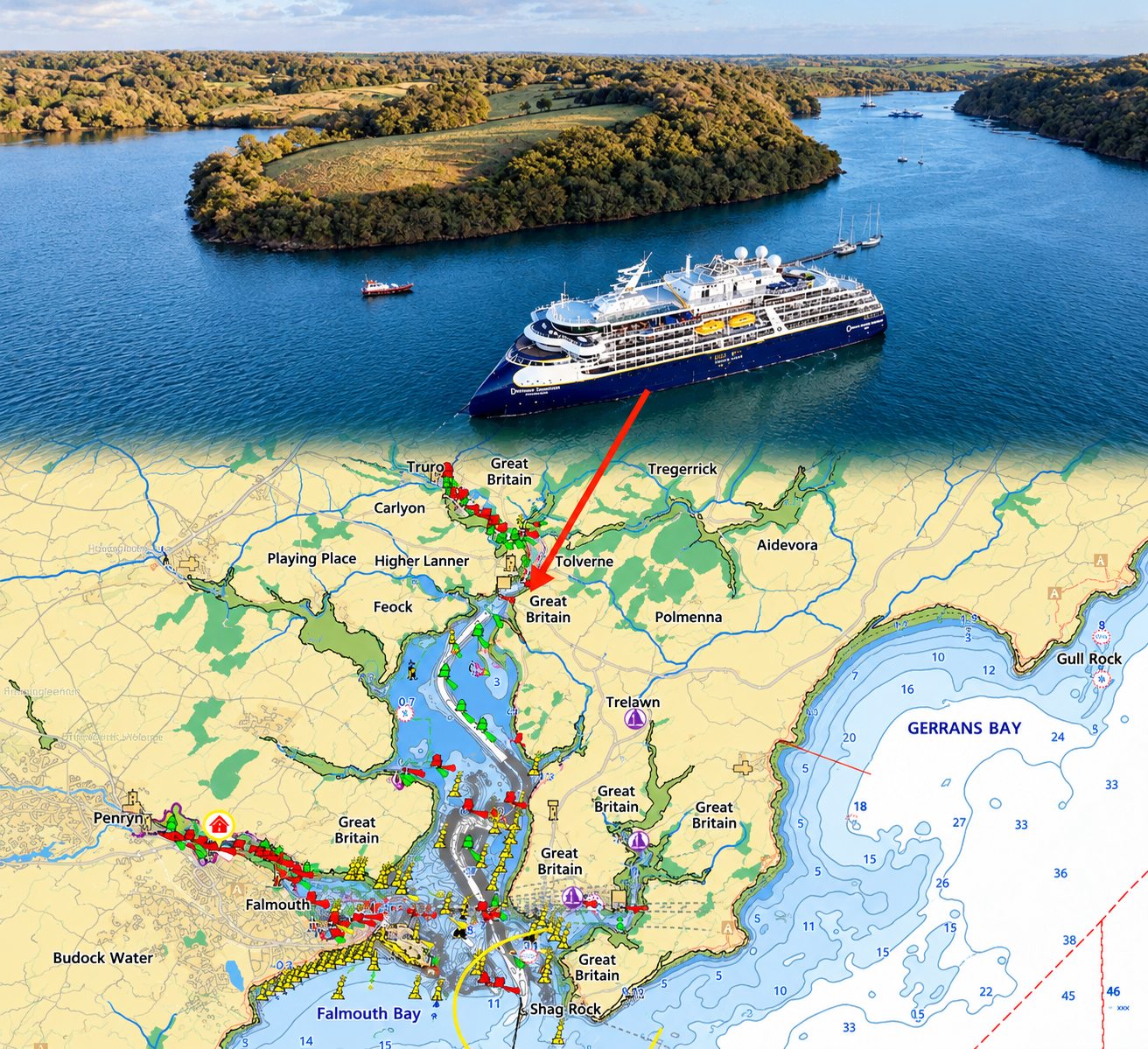
At one time sizeable cargo vessels regularly navigated the Carrick Roads and Truro river right up to the city itself (10 miles from the sea). Recently the ‘National Geographic Endurance’ became the first cruise ship ever to pass Turnaware Point and into the river. A real treat for the passengers.
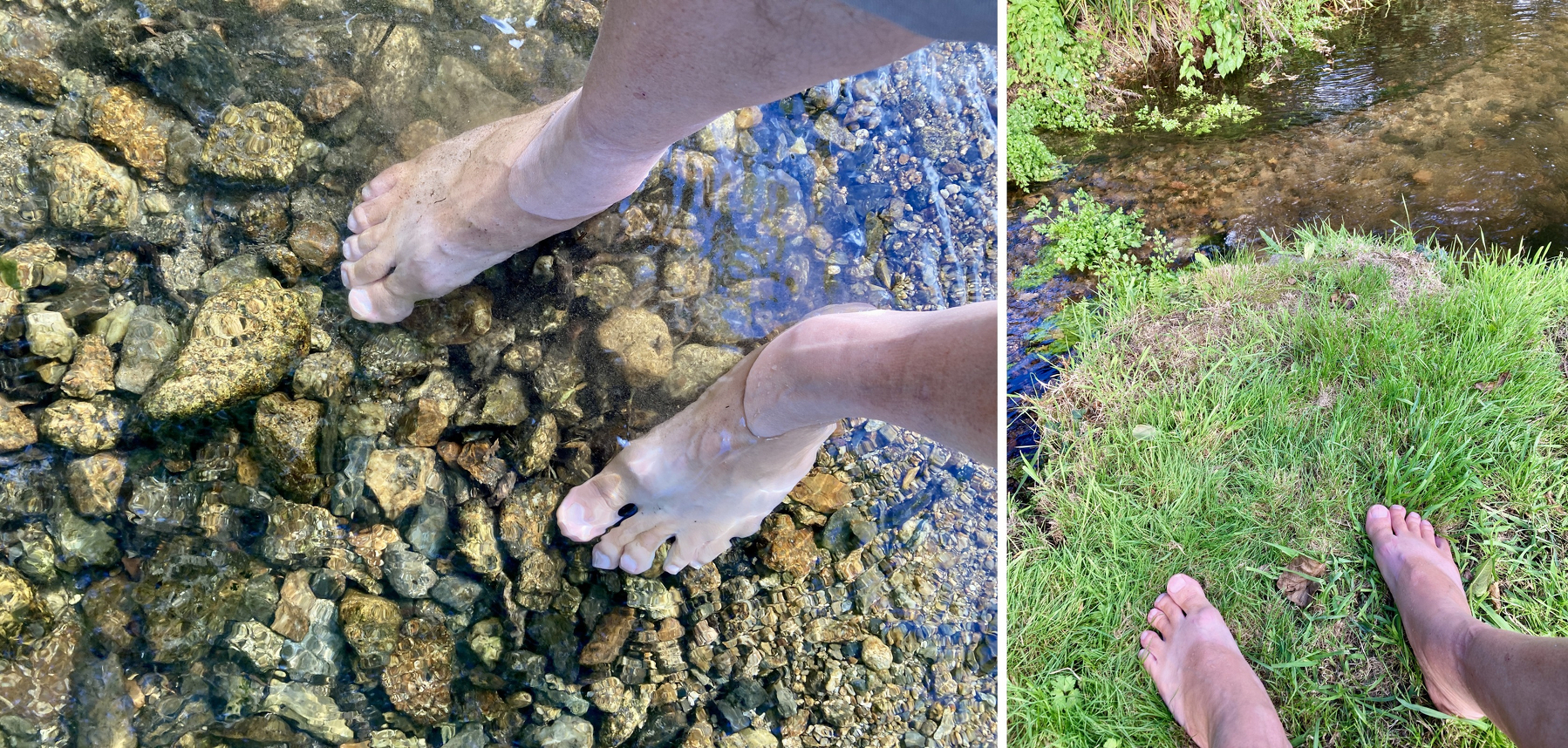
After a long day in front of a screen it’s good to reconnect with the real world. Paddling in the river Kennal and 23°C (73℉). An unusual October for Cornwall
Desk at 05:15, still going at 10:50. Not boasting, just showing how motivated I am about my new writing project. Full post tomorrow. Meanwhile I’m building a 3-month plan and trying Eden, an AI-powered knowledge and productivity system.