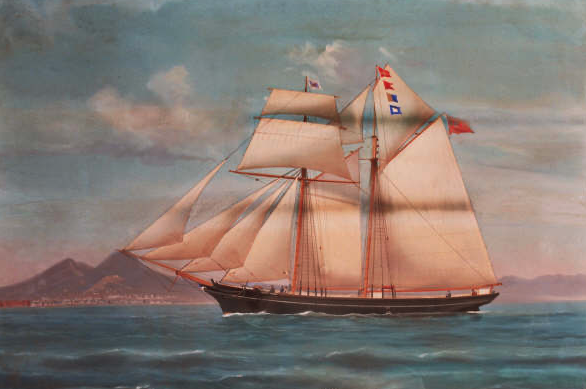
Lady Agnes: A Schooner, a Story, and Two Ports Close to My Heart
This morning, we drove from our home on the south coast of Cornwall to St Agnes, a village on the north coast of Cornwall. That it’s only a 9 mile trip explains why we get storm-blown salt on the windows whichever way the wind blows.
St Agnes and its surrounding coastline are part of the UNESCO Mining Heritage Site and was famously said to have some of the best tin in the world during its mining boom in the 18th and 19th centuries.
It’s home to a wonderful little museum we’ve wanted to visit for a while.
Unsurprisingly, mining exhibits take centre stage, but of course, ships and the sea feature also.
I was particularly taken with the story of the ‘Lady Agnes’ and her figurehead.
‘Lady Agnes’ was a 79ft topsail schooner built in 9-months during 1877. They had to work quickly because, amazingly, she was built on the beach in Trevaunance Cove just below St Agnes. Totally exposed to northerly winter storms, any delay would have been disastrous.
The vessel worked under sail for nearly 60 years before ending her days as a hulk in Portmadog South Wales. Amongst other things, she transported slate to the Mediterranean and bought salt cod from Newfoundland to Portugal.
Her fascinating story made buying a book about her from the museum gift shop a temptation I couldn’t resist.
My first leaf through its pages led me to the voyages she made in 1881. She sailed from Falmouth in May of that year and arrived in Cartagena (Spain) later that same month. She then made two trips between Newfoundland and Portugal before arriving back in Plymouth that December.
Falmouth and Cartagena are the two ports closest to my heart.
I’m looking forward to spending some time with Lady Agnes.