It’s Never Too Late to Start Again
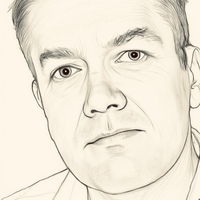
At 87, most people are content with gardening, reminiscing about the good old days, or perhaps taking up a gentle hobby like playing bowls. Not Sven Yrvind. He’s busy building a tiny boat to sail solo to New Zealand, pondering improvements for his next vessel, and sharing his adventures on YouTube.
Some might call him eccentric; others might think he’s lost his marbles. But to me, he’s a beacon of what’s possible when you refuse to let age, convention, or practicality dictate your life’s course.
A Brief History of Defiance
Sven’s maritime journey began in 1962 when he left Sweden in a 15-foot converted Blekingseka (a traditional Swedish boat, specifically a type of open, sprit-rigged sloop).
Since then, he’s become renowned for his solo voyages in small self-built, minimalist boats. In 1980, he rounded Cape Horn solo in ‘Bris II,’ a 5.90m boat of his own design, earning the Royal Cruising Club’s Medal for Seamanship. His boats embody his philosophy of simplicity and self-reliance.
That his most recent boats have been called ‘Exlex’ gives another clue as to Sven’s character. Exlex is an obsolete word that means “outlaw” or “bound by no law”. It comes from the Medieval Latin term meaning “without legal authority”. In essence, it describes someone or something that exists outside the framework of the law.
The Current Project: ‘Exlex X’ and the Quest for Ice Cream
I first stumbled across Sven’s YouTube channel in 2020. He’d just started building a new boat. His plan? Sail solo from Ireland to Dunedin, New Zealand, across the Southern Ocean, to enjoy an ice cream. Yes, you read that correctly.
In April 2024, he gave up on the boat he was building and started adapting a 30-year-old, 5.3-meter-long canoe cruiser of his own design instead.
He launched that boat in September of this year. It floated too low in the water for his liking, so he decided to start over with a new boat.
Now he’s working on ‘Exlex X’. The ‘X’ stands for experimental. He’ll only build the New Zealand boat when he’s proved the design with this plywood version.
He’ll be into his 90s by then.
Crazy eh?
A Philosopher with Epoxy on His Hands
Sven doesn’t talk like most adventurers. He talks about systems theory and metaphysics. About the peace of solitude and the importance of friction. He quotes Latin. He challenges modern life’s obsession with speed, comfort, and distraction. His boats, deliberately small and slow, are physical expressions of his philosophy.
He’s not trying to escape life, simply trying to live it on his own terms.
He says, “Out there, on the sea, I feel safe. On land, I’m like a fish in the woods.”
You could take that as poetic eccentricity. Or you could hear the deeper truth: not everyone fits into the systems we’ve built. Not everyone is nourished by shopping malls, TV news, smartphones, or a retirement plan. Some of us, perhaps many more than we admit, are choking on comfort and dying of safety.
The Fool as Role Model
Sven doesn’t pretend to be a guru. His presentation is not slick. He mumbles on YouTube, he has the shakes, and he fiddles with his camera. He doesn’t chase followers, but neither is he afraid to ‘beg’ for contributions to his project. And that’s part of the appeal.
He’s not marketing a lifestyle. He’s simply living his own.
That kind of freedom is rare and, to many, unsettling. We like our rebels young. Old age is supposed to be a time of withdrawal, not reinvention.
But there have always been people who ignored that script.
I was reading the other day about Emma (Grandma) Gatewood. In 1955, at age 67, she became the first woman to hike the entire Appalachian Trail solo with only the most basic of kit. She walked the 2,055 miles (ca. 3,307 km) in 146 days.
She did it twice more before she died.
Like Sven, she wasn’t doing it for any other reason than she had decided she wanted to. Her age and gender didn’t come into it. She simply answered a call late in life, against expectation, and without apology.
A Philosophy of Refusal
Sven could have retired years ago, a respected elder of the sailing world. But he’s not interested in slowing down in the usual sense. He’s interested in going deeper, into himself, into the craft of boatbuilding, into the rhythms of the sea.
He rejects modern boat design because he believes it prioritises comfort and profit over seaworthiness.
This isn’t stubbornness for its own sake. It’s a kind of spiritual resistance, a refusal to be reduced to a consumer, or to fade away obediently.
And in that refusal, he becomes a kind of modern-day fool, not the clownish kind, but the archetype found in old myths and stories. The fool who walks off the beaten path. The fool who questions the rules. The fool who, in seeming to know nothing, ends up knowing the most important things.
The Real Risk
People worry about Sven’s safety. They say, “What if something goes wrong out there?” As if nothing ever goes wrong in care homes, on motorways, in the lonely corners of quiet suburbs.
The real risk, I think, is to spend your final years in quiet regret, wondering what might have happened if you’d dared to keep living instead of waiting to die.
Sven isn’t waiting. He’s planning. He’s building. He’s dreaming. And whether he reaches New Zealand is almost beside the point.
He’s already succeeded.
What’s Left to Prove?
There’s a hidden heroism in what Sven is doing. It’s not glamorous. It’s not even especially practical. But it’s meaningful.
Because the older we get, the harder it is to hold on to that spark, to stay curious, foolish, brave. To resist the story that says we should have it all figured out by now. That adventure is for the young. That risk is irresponsible. That it’s too late to start again. Sven says no to all that. And in doing so, he gives the rest of us permission to say no too.
So What About You?
You don’t need to sail a home-built boat to the far side of the world. You don’t need to hike 2,000 miles. But maybe you do need to start something that makes no sense to anyone else.
Perhaps you need to revisit the dream you shelved long ago. Maybe you just need to be a little foolish.
That’s not failure. That’s freedom.
And no, it’s not too late.